
Customs & Compliance / Relocation Guides - Spain
Moving from the UK to Spain is no longer a simple case of loading a lorry and unpacking at the other end. Since the UK left the European Union, household goods entering Spain must pass through EU customs. That means paperwork, eligibility checks, and a formal import declaration.
The good news is that many people relocating permanently can bring used household effects into Spain without paying import duty or Spanish IVA. To do this, the move must qualify for Transfer of Residence relief, often called ToR relief.
This relief exists for genuine household relocations. It is not designed for importing new goods, stock, alcohol, tobacco, or commercial items. If the customs file is incomplete, or if the shipment does not meet the rules, Spanish customs may delay the load or apply charges.
This guide explains the main Spain customs rules for moving household goods from the UK, the documents usually needed, and the common issues that cause delays.

Transfer of Residence relief is the key customs route
Transfer of Residence relief allows qualifying people to import used personal belongings into Spain without paying standard customs duty or 21% Spanish IVA. It applies when someone is moving their normal place of residence from outside the EU to Spain.
For UK residents, this matters because the UK is now treated as a non-EU country for customs purposes. A shipment of furniture, clothing, books, kitchenware, bicycles, tools for personal use, and similar household items must be declared when it enters Spain.
ToR relief is not automatic. Spanish customs authorities, through Agencia Tributaria, expect evidence that the move is genuine and that the items are personal effects already owned and used before the relocation.
The core conditions are straightforward, but they must be proved.
You must have owned and used the goods for at least six months
Household effects should normally have been in your possession and use for at least six months before leaving the UK.
This rule helps customs separate genuine used belongings from newly purchased goods. A sofa used in your UK home for several years will usually fit the purpose of the relief. Ten boxed, brand-new televisions bought shortly before the move would not.
Proof can vary depending on the item. For most everyday household effects, customs will not expect a receipt for every plate, towel, or book. For higher-value goods, clear evidence can help. This may include purchase receipts, insurance records, photographs in the former home, service records, or warranty documents showing age.
You must have lived outside the EU for at least 12 months
To qualify, you must show that your previous normal residence was outside the EU for at least 12 consecutive months before moving to Spain.
For a UK to Spain move, this usually means proving UK residence. Useful evidence may include council tax bills, utility bills, tenancy agreements, property records, bank statements, employment documents, or other official correspondence showing a UK address over the relevant period.
The evidence should create a clear timeline. If the paperwork suggests that you were already resident in Spain before the shipment, customs may question whether the goods are being imported within the permitted relocation rules.
The goods must arrive within the allowed import window
Personal belongings should be imported within 12 months of officially establishing residence in Spain.
This is one area where timing matters. The date you establish residence may be linked to documents such as your empadronamiento, rental contract, property deed, residence application, or other official evidence. If goods arrive too late, customs may refuse relief or ask for further explanation.
Many households do not move everything in one load. Spanish customs rules can allow belongings to arrive in more than one shipment, but each shipment still needs to sit within the relief conditions and be properly declared.
The documents Spanish customs will expect
A successful customs clearance depends on documents that match each other. Names, dates, addresses, passport details, and inventory information should be consistent across the file.
Small errors can cause disproportionate problems. A missing NIE, a vague inventory, or a Spanish address that does not match the residence evidence can hold up a shipment at the border or port.
The exact documents requested can vary by case, port, and customs review, but the following are central to most household removals from the UK to Spain.
Document | What it proves | Practical tip |
NIE or TIE | Spanish tax identification or foreign identity details | Apply early, as customs clearance normally needs a Spanish identification reference |
Proof of Spanish residence | You are establishing residence in Spain | Empadronamiento, property deed, or rental agreement should show the Spanish address clearly |
Proof of previous UK residence | You lived outside the EU for at least 12 months | Use official records that cover the full period |
Itemised inventory | The shipment contains used personal effects | List rooms, carton counts, main furniture, and second-hand values in euros |
DUA import declaration | The formal customs entry into Spain | This is usually prepared and lodged by the removals or customs agent |
Passport or identity document | Confirms the importer’s identity | Details should match the customs paperwork |
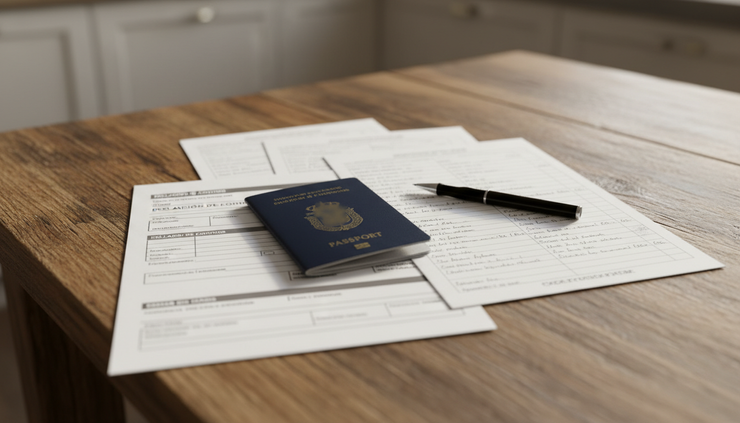
NIE and TIE documents identify you to Spanish authorities
The NIE is the foreigner identification number used for tax and administrative matters in Spain. A TIE is the physical foreign identity card issued to certain non-EU residents.
For customs purposes, the key point is that Spanish authorities need a recognised identification reference. If the shipment is in your name, the paperwork should tie the goods to you as the person relocating.
If a couple or family is moving, the customs agent may advise which person should act as the importer for the household effects. This should match the residence evidence and inventory.
Proof of residence shows the move is genuine
Spanish customs need proof that you are not simply sending goods to Spain for storage, resale, or temporary use. Common evidence includes:
Empadronamiento from the local town hall
Spanish property deed
Spanish rental agreement
Residence application or approval documents where relevant
Utility connection documents in some cases
The empadronamiento is especially useful because it records registration with the local municipality. If it is not yet available, other residence evidence may be needed, but this should be checked before the goods travel.
A detailed inventory is more than a packing list
The inventory is one of the most important documents in the file. It should list what is being imported in enough detail for customs to understand the shipment.
A weak inventory might say:
50 boxes
Furniture
Personal items
That leaves too many questions. A stronger inventory gives a clearer picture:
Living room furniture, including used sofa, coffee table, TV unit, and two lamps
Kitchenware, including plates, pans, cutlery, small appliances, and glassware
Bedroom furniture, including used bed frame, mattress, chest of drawers, and wardrobes
24 cartons of clothing and shoes
12 cartons of books and personal documents
Garden tools for personal household use
The inventory should also include estimated second-hand values in euros. These are not replacement values. They should reflect realistic used values. Inflated values can create questions, while values that look too low may also attract attention.
The DUA is the formal Spanish customs declaration
The DUA, or Documento Único Administrativo, is the official customs declaration used in Spain. For household removals, it records the import of your personal effects and the relief being claimed.
Most private movers do not complete the DUA themselves. It is normally handled by a customs agent or an experienced international removals company. The agent uses your documents, inventory, and shipment details to file the declaration correctly.
This is where preparation pays off. If the DUA refers to one address while the residence proof shows another, or if the inventory does not match the packed goods, customs may pause the clearance.
Some goods do not qualify for duty-free household relief
Transfer of Residence relief applies to used personal and household effects. It does not cover everything that can fit into a removals vehicle.
Spanish customs may exclude items that look commercial, restricted, new, or unsuitable for household relief. Some goods may need separate declarations, permits, or payment of taxes. Others should not be packed at all.

New goods can create customs charges
Items owned for less than six months may fall outside ToR relief. This often affects goods bought just before the move, such as appliances, electronics, furniture, or large quantities of household equipment.
A single new item does not always mean the whole shipment fails, but it may need to be declared separately and assessed for duty or IVA. Large volumes of new goods are more likely to cause problems, especially if they appear suitable for resale.
If you plan to buy new furniture for Spain, it may be simpler to buy it after arrival rather than include it in the UK shipment.
Commercial goods are not personal effects
Business stock, tools for trade in commercial quantities, sales samples, and retail goods do not fit standard household relief.
This distinction can be less obvious for people who work from home or run a small business. A personal laptop and home office chair may be acceptable as household effects. Multiple boxes of stock, packaged products, or equipment used mainly for commercial activity may not.
If the shipment includes professional equipment, describe it clearly before transport. A customs adviser can confirm whether it can travel with the household goods or needs a separate process.
Alcohol, tobacco, and restricted items need special care
Alcohol and tobacco are commonly excluded from standard duty-free household allowances. Customs authorities treat these products differently because excise duties may apply.
Restricted agricultural items can also cause issues. Plants, seeds, soil, certain food products, and animal-origin goods may be subject to health controls or bans. Rules can change and may depend on the exact item, so it is safer not to include these unless they have been checked in advance.
Common items to review before packing include:
Wine, spirits, beer, and tobacco
Plants, bulbs, seeds, and soil
Fresh food, meat, dairy, and certain pantry items
Firearms, weapons, or controlled items
Medicines in large quantities
High-value collections or antiques
Vehicles, motorcycles, boats, or trailers
Some of these may be allowed under separate procedures. The key point is not to hide them in a general household load. Customs problems become harder to solve when undeclared items appear during inspection.
Planning the customs file before moving day prevents delays
The best time to deal with Spanish customs is before the first carton is sealed. Once the goods are in transit, missing documents can quickly become expensive. Storage charges, delayed delivery dates, and extra customs queries can all follow.
A well-planned move builds the customs file alongside the packing plan.
Start with your residence timeline
Before booking transport, map out three dates:
The date you last lived normally in the UK
The date you establish or expect to establish residence in Spain
The date your goods are due to enter Spain
These dates should support the ToR claim. If the move falls close to the 12-month import window, get advice before shipping.
Keep copies of the evidence that supports each date. Customs officers look for a coherent story, not just a pile of unrelated documents.
Prepare the inventory room by room
A room-by-room inventory is easier to check and easier to match against the load.
For each room, include:
Main furniture items
Number of cartons
General contents of cartons
Any higher-value items
Estimated used value in euros
Avoid vague descriptions such as “miscellaneous goods” or “personal items” for every box. Some general wording is normal, but customs need enough detail to see that the shipment is a genuine household removal.
Photos can also help, especially for higher-value used goods. They are not always required, but they can support ownership and condition if questions arise.
Make sure packed goods match the paperwork
The customs inventory should reflect the actual shipment. If items are added at the last minute, tell the removals team. If items are removed, update the list.
Discrepancies can create suspicion. A customs file that lists normal household furniture but includes sealed retail cartons may be challenged. A declaration that omits alcohol or commercial stock can lead to inspection and extra charges.
Keep originals and copies available
The brief for many Spanish customs entries calls for original documents. In practice, digital copies may also be used at different stages, but original documents should be available when requested.
Keep a separate folder with:
Passport or identity document
NIE or TIE evidence
UK residence proof
Spanish residence proof
Property or rental documents
Inventory with values in euros
Any receipts for high-value goods
Contact details for the removals coordinator or customs agent
Do not pack this folder into the shipment. Carry it with you.

Working with a removals company can reduce border problems
Customs clearance is a technical part of an international move. It is also time-sensitive. A removals company that handles UK to Spain relocations regularly can help prepare the file, check the inventory, and coordinate the DUA declaration with the customs agent.
At The Executive Movers LTD, international moving coordinators manage DUA filing and customs paperwork for household moves to Spain. That support can make a significant difference when documents need to be checked before loading, corrected before departure, or presented at Spanish border ports.
The mover cannot change the legal requirements. You still need to qualify for relief and provide honest documents. What a good coordinator can do is make the process clearer, spot gaps early, and help avoid preventable delays.
A practical pre-move customs check should confirm:
The shipment qualifies as used household effects
The six-month ownership rule is understood
The 12-month previous residence rule is evidenced
The Spanish residence date fits the import window
The inventory is detailed and valued in euros
Excluded or restricted goods have been removed or declared separately
The DUA process is ready before the goods reach customs
This article is for general information only and is not legal or tax advice. Spanish customs decisions depend on the facts of each move and the documents submitted.
A move from the UK to Spain is much easier when customs is treated as part of the relocation, not as an afterthought. Prove your residence history, prepare a clear inventory, keep restricted goods out of the load, and make sure the DUA is handled correctly.
Get those pieces right, and your household goods have the best chance of entering Spain without unnecessary duty, IVA, or delay.



Comments