
Dubai FCL & Groupage Shipping Guide for Executive Movers Customs Clearance and Duty Free Personal Effects
Moving a whole household to the UAE is not the same as sending a few cartons by air. A 20ft or 40ft full container load, often called FCL, moves through a formal ocean freight process, arrives at a major container terminal, and must clear UAE customs before delivery can begin.
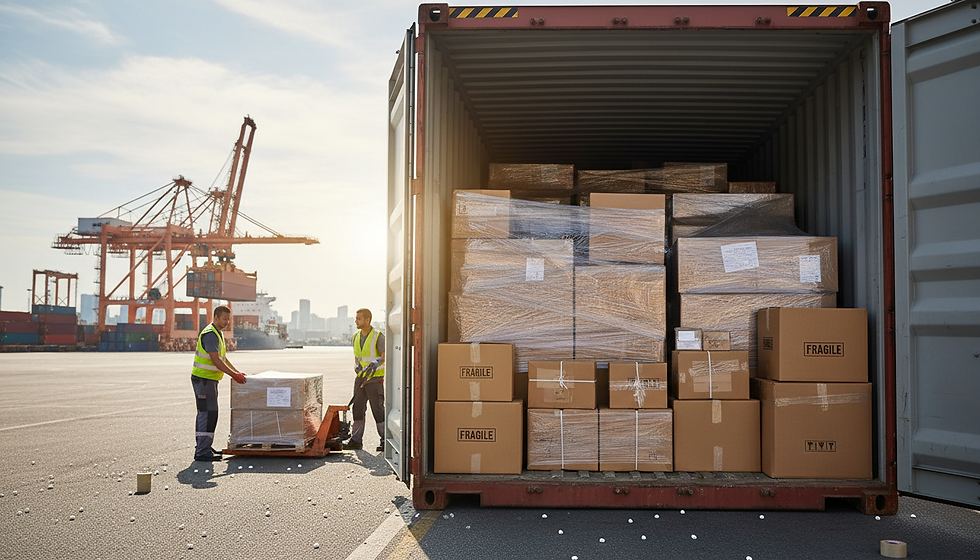
For Dubai, Abu Dhabi, Sharjah, and the wider UAE, many household goods containers arrive through high-volume ports such as Jebel Ali Port. This is one of the world’s busiest container hubs, which means the process is efficient, but also highly controlled. The paperwork must match the shipment, the packing list must be clear, and restricted items must stay out of the container from the start.
Executive Movers LTD manages the full door-to-door process for international removals to the UAE, including export packing at origin, container loading and sealing, ocean freight, customs clearance, and destination delivery. This guide explains how Dubai FCL shipping works for household goods, what documents are needed, and how the UAE duty-free personal effects exemption applies.

How FCL shipping to Dubai and the UAE works
FCL shipping means one customer uses a full shipping container for their goods. For household moves, the most common choices are a 20ft container or a 40ft container.
A 20ft container is often used for a smaller household move, flat contents, or a partial family home. A 40ft container suits larger homes, bulky furniture, outdoor items, and full household contents. The right size depends on volume, not just the number of rooms. Sofas, wardrobes, bicycles, garden furniture, and fragile packed items can quickly fill container space.
With Executive Movers, the FCL process usually follows this path:
A survey or volume assessment confirms the likely container size.
Export packing takes place at the origin property.
Furniture is wrapped and boxes are labelled.
A full packing inventory is prepared.
The container is loaded and sealed.
The sealed container moves to port for export.
The vessel carries the container to the UAE.
The shipment arrives at Jebel Ali Port or another UAE container terminal.
Customs clearance is completed.
10. Delivery, unpacking, and placement take place at the UAE residence.
The key benefit of FCL is control. The container is used for one shipment, sealed after loading, and handled as a complete unit during ocean transit. This makes it a strong option for families relocating to Dubai, Abu Dhabi, or another emirate with a full household of personal effects.
FCL also helps with planning. Once the vessel schedule is confirmed, the move coordinator can prepare the import file and advise when documents are needed. That matters because customs clearance cannot be completed on good intentions. It depends on a complete and accurate document set.
The UAE personal effects exemption can reduce import costs
The UAE applies customs duty and VAT to many imported goods. The standard rates are commonly 5% customs duty and 5% VAT. Used personal effects and household furniture may qualify for duty-free and VAT-free entry when they meet the conditions for personal relocation.
The main principle is straightforward: the goods must belong to a person entering the UAE to live there, not a business importing stock for sale.
For household removals, the exemption generally applies to items such as:
Used furniture
Clothing and footwear
Kitchenware
Books
Personal decorations
Children’s toys
Household appliances
Sports equipment for personal use
General domestic belongings
To qualify, the shipment should be consistent with a genuine home move. Customs officers look at the nature of the goods, the owner’s residency status, and the supporting documents. A container filled with normal used household contents is very different from a container holding multiples of new boxed products.
The UAE duty-free personal effects exemption is designed for residents bringing their own used household goods into the country to live.
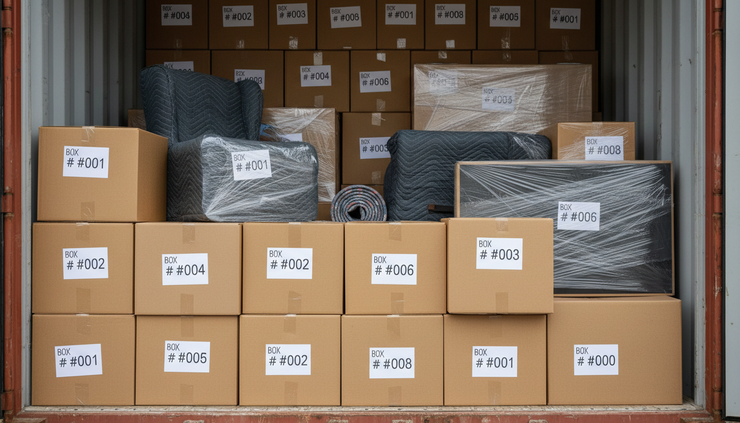
This is why the packing list matters. A vague inventory such as “household goods” is not enough for a smooth clearance. A detailed list with box counts and furniture descriptions helps customs understand what is inside the container before inspection or release.
The exemption should not be treated as a way to import commercial goods, new stock, restricted products, or items for resale. Customs authorities can request clarification, inspect cargo, or apply charges if the shipment does not meet the rules.
This guidance is for general information only. Customs requirements can change, and final decisions rest with UAE customs authorities.
Documents needed for Dubai customs clearance
For an FCL container entering Dubai, the import clearance file must be ready when the vessel arrives. Missing documents can delay release, increase storage costs, and disrupt the delivery schedule.
Executive Movers LTD helps prepare and check the document set before arrival, but the customer must provide the personal residency documents required by UAE customs.
Passport copy and residence visa
A clear copy of the passport is required for the named shipper or consignee. The customs file also needs proof that the person is legally entering or residing in the UAE.
This usually means one of the following:
A valid UAE residence visa stamped in the passport
An official entry permit
Proof that the residence visa process is under way
The name on the passport and visa details should match the shipping documents wherever possible. If a spouse, employer, or relocation agent is involved, the file may need extra supporting information.
Emirates ID copy
A copy of the resident Emirates ID card is normally required for customs clearance. For new arrivals, timing can be an issue because Emirates ID processing may still be in progress.
If the Emirates ID is not yet available, the clearance team will advise what alternative proof may be accepted at that stage. The safest option is to start the document check early, before the vessel reaches the UAE.
Original Bill of Lading
The Original Bill of Lading, often called the OBL, is the key marine transport document issued by the shipping line. It confirms shipment details such as the vessel, container, shipper, consignee, and port routing.
The OBL must be handled carefully. If original documents are required and they are delayed, the container may arrive before the release documents are ready. Some shipments move under telex release or sea waybill arrangements, but this depends on the shipping line and booking terms.
For that reason, Executive Movers reviews the Bill of Lading process as part of the wider move plan.
Comprehensive packing list
The packing list is one of the most important documents for UAE household goods customs clearance. It should describe the shipment clearly and match the physical contents of the container.
A strong packing list includes:
Total number of boxes
Box numbering
General contents by box or group
Furniture items
Large appliances
Fragile items
Outdoor goods
Any items that may need special attention
For example, “Box 14, kitchen utensils and plates” is more useful than “miscellaneous”. “Three-seater sofa, wrapped” is clearer than “living room item”.
A detailed inventory reduces questions, supports the personal effects exemption, and helps the destination crew place items correctly during delivery.
Restricted and prohibited items must be removed before packing
Dubai Customs and UAE authorities apply strict controls to household goods imports. Some items are not suitable for inclusion in an international removal container. Others may require permits, approvals, or complete exclusion.
The safest rule is simple: if an item could raise customs, safety, cultural, or security concerns, declare it before packing day and ask for guidance.
Strictly restricted or prohibited items include:
Narcotics and controlled substances
Controlled pharmaceuticals
Unprescribed medicines
Firearms and ammunition
Airsoft equipment
Tactical gear
Alcohol
Pork products
Goods that breach UAE cultural or religious standards
Unapproved wireless equipment
Radio transmitters
Unauthorised drone technology
Medicines deserve special care. A routine prescription in one country may be controlled in another. Do not pack loose medicines, large quantities, or unlabelled tablets inside general cartons. Keep essential medication with travel documents where appropriate, and check the UAE rules before departure.
Wireless technology can also cause problems. Drones, transmitters, radio equipment, and certain communications devices may need approval. Packing them without checking can delay the whole container.
Alcohol and pork products should not be included in household effects containers. Even small quantities can create avoidable problems at clearance.

Why Jebel Ali Port clearance needs careful coordination
Jebel Ali Port handles large volumes of container traffic, which is good for global shipping access but demanding for clearance timing. A household container does not simply arrive and go straight to a villa or apartment. It must pass through the port, shipping line release, customs processes, and local delivery planning.
Several steps often happen close together:
Vessel arrival confirmation
Container discharge at the terminal
Shipping line documentation and release
Customs entry submission
Duty-free exemption review
Inspection if selected
Port and handling procedures
Collection by destination transport
Final delivery booking
Any weak point can slow the release. A missing visa copy, unclear packing inventory, unpaid shipping line charge, or document mismatch may hold up the container. Port storage and demurrage can also become expensive if delays continue.
This is where an experienced moving company makes a practical difference. Executive Movers LTD coordinates with freight partners, port agents, customs clearance teams, and delivery crews so the shipment keeps moving through each stage.
The goal is not only to clear the container. It is to deliver the goods in good order, with the right team, vehicle access, building permissions, and unpacking plan in place.
What Executive Movers handles from origin to UAE delivery
International removals work best when every stage connects. A well-packed container can still face delays if the Bill of Lading is wrong. A perfect document file can still suffer if the packing list is vague. A cleared container can still be difficult to deliver if the destination building has lift restrictions or loading bay rules.
Executive Movers provides a managed process for FCL household goods shipping to Dubai, Abu Dhabi, and the wider UAE.
The service covers:
Pre-move survey and volume planning
Advice on 20ft and 40ft FCL container options
Professional export packing
Furniture wrapping and carton labelling
Detailed packing inventory preparation
Container loading and sealing
Ocean freight coordination
Shipping document checks
Destination customs clearance at Jebel Ali Port
UAE delivery scheduling
Unpacking and placement where agreed
For higher-value household contents, careful packing is not optional. Long ocean journeys involve lifting, stacking, vessel movement, humidity changes, and multiple handling points. Good export packing protects furniture corners, glass, artwork, kitchenware, and personal items before the container ever reaches the port.
The container seal is another important control. Once loaded, the seal number should be recorded on the shipping paperwork. This helps verify that the container remains sealed during transit unless opened by an authorised party, such as customs.
Destination service matters too. Many UAE homes are in apartment towers, gated communities, villa compounds, and managed developments. Delivery access, service lifts, parking, and building timings may need to be arranged before the container is released from port.

Practical tips before shipping a household container to the UAE
A smooth UAE relocation starts before packing day. The best time to solve customs issues is while the goods are still at home, not after the vessel has arrived.
Use this checklist before your container is loaded:
Confirm whether a 20ft or 40ft FCL container suits the household volume.
Separate anything that should travel by air or personal luggage.
Remove alcohol, pork products, drones, transmitters, weapons, and controlled items.
Review all medicines and prescriptions before packing.
Keep passports, visa documents, Emirates ID, and shipping papers out of the container.
Make sure the packing list is detailed and readable.
Tell the move coordinator about high-value, unusual, fragile, or regulated items.
Check destination access for villas, apartments, lifts, and loading areas.
Keep copies of all documents in digital form.
Do not pack documents needed for customs inside the container. This is a common and costly mistake. The passport copy, visa proof, Emirates ID copy, and shipping paperwork must be available for clearance while the container is still at port.
It also helps to prepare for timing differences. Ocean freight schedules can shift due to port congestion, vessel changes, weather, or transhipment delays. A good move plan allows for some movement in dates, especially when booking temporary accommodation or arranging work start dates.
A clear route for duty-free UAE household goods clearance
FCL shipping to Dubai is a structured process. When the goods are properly packed, the container is sealed, the inventory is detailed, and the documents are ready, customs clearance becomes far more predictable.
The most important points are simple:
Used personal effects and household furniture may qualify for exemption from standard 5% customs duty and 5% VAT.
The shipment must belong to a resident entering the UAE to live.
Dubai Customs needs the right documents on arrival.
Restricted and prohibited items must be kept out of the container.
Jebel Ali Port clearance works best when origin packing, ocean freight, and destination delivery are managed together.
Executive Movers LTD oversees the full route, from export packing at origin to white-glove destination customs clearance and delivery in the UAE. For families moving to Dubai, Abu Dhabi, or another emirate, that joined-up handling can turn a complex container move into a controlled relocation plan.
A successful UAE FCL move is built before the ship sails. Pack correctly, document clearly, declare honestly, and let the clearance process start with everything already in order.


Comments