
Swiss and German Customs Guide for Executive Movers
A successful move to Switzerland or Germany is not only about packing well and booking the right vehicle. The border paperwork matters just as much. A missing form, an incomplete inventory, or a late declaration for a second shipment can hold up household goods at the point where timing matters most.
Moving household effects into Central Europe calls for careful customs planning. Switzerland and Germany sit side by side, but their customs systems work differently. Switzerland is not part of the EU Customs Union, so removals entering the Swiss Confederation face direct border checks and dedicated Swiss documentation. Germany, as an EU member state, uses the EU transfer of residence rules, with its own proof requirements and forms.
This guide explains the key customs documents, the evidence normally needed, and the special declarations that often catch people out. It also sets out how Executive Movers prepares direct-load and groupage shipments so that customs clearance is handled before the vehicle reaches the border.

Switzerland and Germany follow different customs paths
Switzerland and Germany both allow qualifying personal effects to enter duty-free when someone transfers their main residence. The difference lies in the customs authority, the paperwork, and the timing.
For Switzerland, the critical document is Swiss Customs Form 18.44, known as Übersiedlungsgut. It must be presented when the shipment enters Switzerland, usually at a recognised crossing such as Basel, Geneva, or another authorised customs point.
For Germany, the duty-free route falls under the EU transfer of residence framework. The main customs form for household effects is commonly referred to as `Formular 0350`, supported by evidence that the move is a genuine transfer of residence.
That distinction matters because a shipment cannot be treated as “just another European move” when Switzerland is involved. The driver, the paperwork, the goods list, and the customer’s immigration or residence evidence all have to match the customs route being used.
For anyone moving from the UK, this has become even more important since the UK is outside the EU Customs Union. Household goods travelling from Britain to mainland Europe now need customs treatment at entry, even where duty relief is available.
Duty-free import does not mean paperwork-free import. Customs relief normally depends on proving residence, ownership, use, and the purpose of the move.
Swiss customs clearance depends on Form 18.44
Swiss customs rules are precise because Switzerland runs its own border administration. Household effects, furniture, clothing, books, kitchenware, personal tools, and similar items may qualify for duty-free import when they form part of a genuine relocation.
The central document is Form 18.44 for household effects, or Übersiedlungsgut. This form tells Swiss customs that the goods are personal effects brought in as part of a transfer of residence, not commercial imports.
Items must meet the six-month ownership rule
To qualify for duty-free import into Switzerland, household effects should normally have been owned and used for at least six months before entry. This rule is designed to separate genuine personal possessions from newly purchased goods imported to avoid tax or duty.
Common qualifying items include:
Sofas, beds, wardrobes, and tables
Clothing, shoes, and personal accessories
Kitchenware and small domestic appliances
Books, records, and personal collections
Bicycles, tools, and hobby equipment used personally
Newly bought furniture, recent high-value electronics, and unused items may need closer attention. They should be clearly identified rather than hidden inside a general packing list. If Swiss customs ask questions, a clean and honest inventory is far stronger than a vague list.
Residence evidence must support the move
Swiss customs will also expect proof that the importer is genuinely moving residence into Switzerland. For EU and UK citizens, this can include a Swiss residence permit, known as an Aufenthaltsbewilligung, or other accepted evidence such as a countersigned employment contract or Swiss lease.
The document set can vary depending on status and timing, but the principle stays the same. Customs need to see that the household goods belong to someone taking up residence in Switzerland, not someone sending goods for storage, sale, or temporary use.
Useful supporting documents may include:
Passport or national identity document
Swiss residence permit, if already issued
Employment contract signed by the relevant parties
Swiss rental agreement or property documentation
Departure evidence from the previous country of residence
Detailed inventory of household effects
Executive Movers checks the customs route during planning, not on the day of collection. That gives time to identify gaps, request supporting evidence, and prepare the shipment file before the vehicle leaves.

All Swiss shipments must be declared at the first entry
One of the most important Swiss rules is the single declaration window. All personal effects intended for duty-free import should be declared on the initial Form 18.44, even if some items will arrive later in a second shipment.
This matters for groupage moves and staged relocations. A customer might send essential furniture first, then follow with stored items several weeks later. Swiss customs still expects the full intended import to be covered from the start.
A correct first declaration should include:
Goods travelling on the first vehicle
Goods due to arrive in later shipments
Stored effects that will follow after the main move
Any special items needing separate schedules
Vehicles or other assets linked to the relocation
If secondary shipments are missed from the first declaration, later clearance may become more difficult. Customs may question whether those goods form part of the original move, which can lead to extra checks, delays, or duty exposure.
German customs relief uses the EU transfer of residence rules
Germany follows the EU approach for people moving their normal place of residence into the country. Duty-free import is available for personal property when the move meets the relevant transfer of residence conditions.
For UK-to-Germany moves, customs usually require strong evidence of both the previous residence and the new German residence. The shipment file should show that the goods belong to someone who lived outside the EU and is now relocating to Germany.
Proof of prior UK residence is central
For duty-free entry into Germany, customs commonly ask for proof that the importer lived in the UK for at least 12 months before the move. This supports the claim that the goods are part of a real household relocation.
Evidence can include:
Council tax statements
Utility bills
Tenancy agreements or mortgage statements
Employment records
Bank or insurance letters showing the UK address
Other official correspondence covering the required period
The evidence does not need to be complicated, but it should be consistent. Names, dates, and addresses should match the inventory and customs forms wherever possible.
A German address and Anmeldung support the import
German customs also need proof of the new residence. In practice, this often means a German address and evidence linked to the local registration process, known as Anmeldung.
The Anmeldung confirms registration with the local authority after moving into a German address. Depending on timing, customs may also accept related documents that show the residence is being established, such as a rental contract or property documents.
German import files often include:
Completed `Formular 0350`
Passport copy or identity document
Detailed valued inventory
Proof of UK residence for the required period
German rental agreement or property document
Anmeldung evidence, where available
Transport document or removal order
The inventory should be detailed enough for customs to understand what is being imported. “20 boxes of miscellaneous” is weak. “Kitchenware, children’s books, winter clothing, bedding, small tools” gives a clearer picture and reduces the chance of follow-up questions.
Vehicles and special items need separate declarations
Household goods are only one part of customs clearance. Certain items require special attention because they fall outside ordinary furniture and personal effects.
Motor vehicles need their own customs treatment
Cars, motorcycles, trailers, and some specialist vehicles should not be buried inside a household inventory. They normally require separate vehicle information and may need dedicated customs handling.
Information often needed includes:
Make, model, and registration number
Vehicle identification number
Proof of ownership
Date of purchase or period of use
Insurance or registration evidence
Planned import or registration route
For Switzerland, the six-month ownership and use principle can be relevant to vehicles as part of a transfer of residence. For Germany, the EU transfer of residence framework can also apply when the vehicle forms part of the personal property being moved, subject to the relevant conditions.
Firearms must be declared with care
Firearms and related equipment are sensitive items. They require separate approval and documentation, and they should never be treated as ordinary household goods.
A move involving firearms needs early discussion. The rules can involve export controls, import permissions, transport restrictions, and secure packing requirements. If the paperwork is not in place, the item should not be loaded.
Wine collections and alcohol may trigger checks
A small amount of normal household alcohol is different from a large wine collection. Wine, spirits, and other alcohol above standard allowances may need separate listing and customs treatment.
A useful wine inventory should include:
Type of alcohol
Number of bottles
Bottle size
Approximate value
Whether the collection is personal or commercial in nature
Customs authorities pay close attention to quantity and value. A private cellar can still be personal property, but it must be declared clearly.
Currency above allowances must be declared
Cash and certain monetary instruments above standard declaration thresholds must be reported separately from household goods. This applies at borders across Europe and is not a matter for the packing list alone.
Anyone carrying significant sums should check the applicable declaration rules before travel. This is separate from the removal vehicle and should be handled as its own compliance issue.
Executive Movers prepares the file before the border
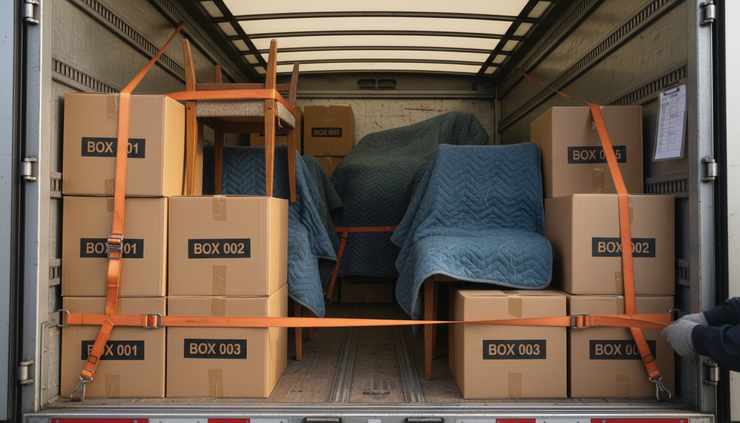
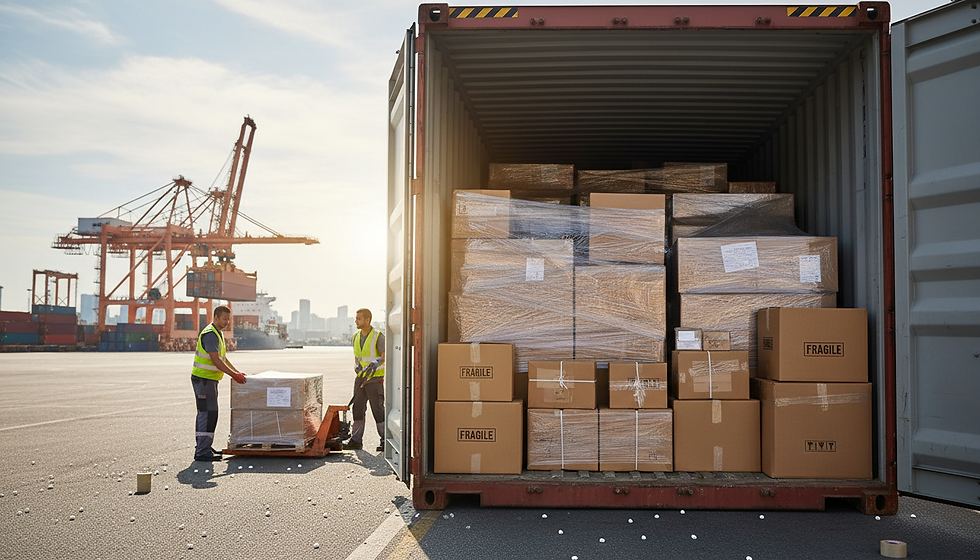
Customs clearance works best when the removal plan and the paperwork are built together. A direct-load shipment, where one customer’s goods travel on a dedicated vehicle, still needs a full customs file. A groupage shipment, where goods are combined with other consignments, needs even tighter document control because timing and route planning affect several moves at once.
Executive Movers supports both routes by preparing the customs documentation around the destination and the goods being carried.
For Swiss moves, that means coordinating the information needed for Form 18.44, checking residence evidence, reviewing inventories, and making sure later shipments are declared from the first border crossing where required.
For German moves, it means preparing customs manifests, helping organise the information required for `Formular 0350`, checking proof of prior UK residence, and matching the shipment to the German address documentation.
The practical aim is simple. When the vehicle reaches customs, the file should already explain:
Who owns the goods
Where the person is moving from
Where the person is moving to
What goods are being imported
Which goods qualify as household effects
Which items need separate customs treatment
Whether more shipments will follow
This preparation helps protect the moving schedule. It also gives customs officers a clear, organised set of documents rather than a bundle of mixed paperwork.

A clean customs move starts long before loading day
Swiss and German customs clearance is manageable when the rules are built into the move from the start. Switzerland requires careful use of Form 18.44, proof of residence, the six-month ownership rule, and a full first declaration for all intended imports. Germany relies on the EU transfer of residence framework, with evidence of prior UK residence, a German address, Anmeldung where available, and a detailed `Formular 0350`.
Special items need their own attention. Vehicles, firearms, wine collections, and currency above standard allowances should be declared separately, not hidden inside a general household list.
Executive Movers handles the customs preparation that sits behind a successful international removal. With the right inventory, the right residence evidence, and the right forms ready before departure, a move to Switzerland or Germany can cross the border with far less risk of delay. This guide is for general information only, and customs requirements should always be checked against the latest official rules for the specific move.

Comments