
UK to France Moving Guide: Customs Declarations, Cerfa 10070 and Duty Free Clearance
Moving home from the UK to France used to feel like a domestic relocation with a ferry crossing in the middle. Since Brexit, it is a formal import of goods into the European Union. That does not mean it has to be difficult, but it does mean the paperwork matters.
If household goods arrive at Calais, Dunkirk, Caen, or another French port without the right declaration, customs can delay the load, ask for extra evidence, or treat items as taxable imports. The good news is that many personal belongings can enter France without customs duty or VAT under the French Franchise de Droits et Taxes rules, provided the move is a genuine transfer of residence.
This guide explains how the French duty-free framework works, what Cerfa 10070 is for, which documents are usually needed, and which goods should not be packed in the removal van.

Why household goods now need a French customs declaration
The UK is now treated by the EU as a third country for customs purposes. When personal belongings move from Britain to France, they cross an external EU customs border. That applies whether the goods travel with a professional removals firm, in a rented van, or in a private vehicle.
For a permanent move, the key point is not only that the goods are “used household items”. French customs still need a formal basis for allowing them in without charging import duty and French VAT. That basis is normally the transfer of normal residence to France.
The declaration tells French customs:
who owns the goods
where the goods came from
why they are entering France
whether the owner qualifies for relief from duties and taxes
whether any restricted items are included
For many moves, a removals company or customs agent will lodge the customs entry electronically. Even then, the person moving remains responsible for the accuracy of the information and the supporting documents. If the inventory is vague, if proof of residence is weak, or if prohibited food items are packed, customs may stop the shipment.
The customs process is not just a border formality. It is the legal step that allows used personal belongings to enter France as part of a residence move rather than as ordinary imported goods.
This article is for general information only. French customs rules can change, and individual cases vary. For complex moves, high-value items, vehicles, firearms, inherited goods, or business equipment, ask French customs or a qualified customs agent for case-specific advice.
How Franchise de Droits et Taxes allows duty-free clearance
The French term Franchise de Droits et Taxes means relief from customs duty and taxes. In the moving-home context, it allows qualifying personal belongings to be imported into France without paying customs duty or VAT when a person transfers their normal residence from a non-EU country to France.
For a UK to France move, this relief is often the difference between a routine customs clearance and a costly import bill. It covers typical personal effects and household goods, such as:
furniture
clothing and linen
books
kitchenware
personal electronics
bicycles
tools for private use
hobby equipment
some personal vehicles, subject to separate rules and evidence
The relief is designed for belongings that form part of a real household move. It is not a way to import new goods, stock, gifts for others, or commercial items tax-free.
The core eligibility rules
French customs will usually look for several conditions before granting duty-free clearance.
Normal residence outside the EU
The person moving should normally have lived outside the European Union for at least 12 consecutive months before moving to France. For a post-Brexit move from the UK, evidence often comes from council tax bills, utility bills, tenancy agreements, mortgage statements, employment records, or similar documents showing UK residence.
Transfer of residence to France
The move must be a genuine relocation of normal residence to France. Customs will expect proof of a new French address or a clear basis for residence in France. This might include a lease, property purchase documents, utility opening documents, an attestation d’hébergement if staying with someone, or other evidence depending on the circumstances.
Prior ownership and use
Most goods should have been owned and used by the person moving for at least six months before the transfer of residence. This rule helps separate genuine household belongings from new purchases brought in to avoid tax.
For ordinary used furniture and clothing, an inventory is often enough. For higher-value items, customs may ask for purchase invoices, insurance valuations, photographs, serial numbers, or other proof.
Import within the allowed period
Personal goods usually need to be imported within the timeframe linked to the residence transfer. In many cases, goods are expected to arrive within 12 months of the person taking up residence in France. Shipments can sometimes arrive in more than one load, but each shipment still needs to be declared and linked to the same move.
Continued personal use after import
Goods admitted under relief should remain for the personal use of the person or household that imported them. They should not be sold, lent, rented out, or transferred soon after arrival. French customs can require payment of duties and taxes if goods are disposed of during the restricted period.
What happens at ports such as Calais, Dunkirk, or Caen
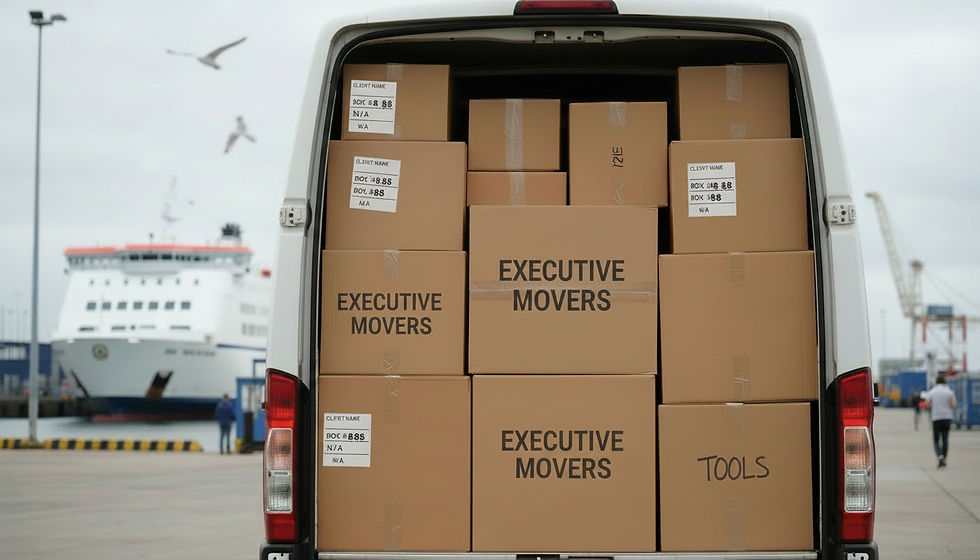
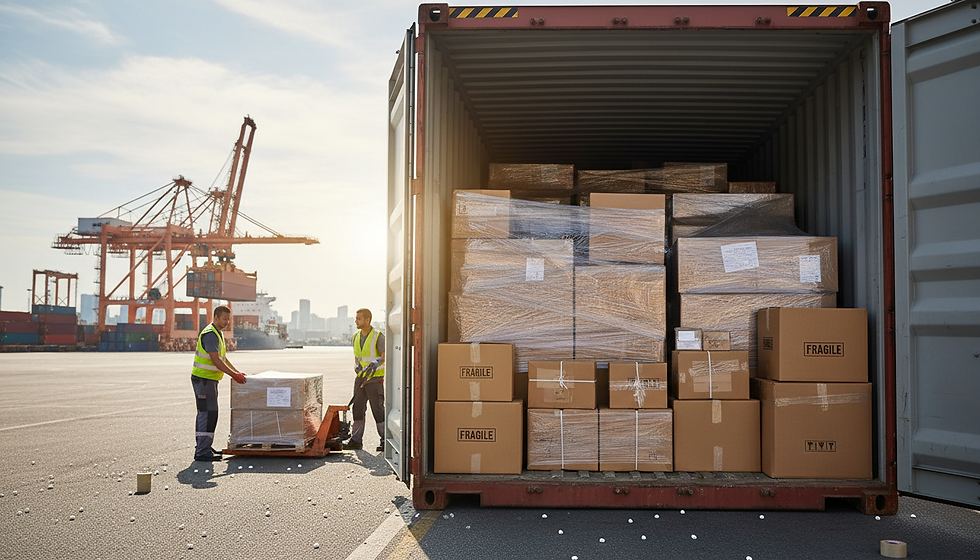
For freight and removals traffic, customs formalities are usually handled before or at arrival through the carrier, customs agent, or removals company. At busy Channel ports such as Calais, Dunkirk, and Caen, the practical process often depends on how the goods are travelling.
A professional removals company will usually ask for the full document pack in advance. They may prepare or arrange the import declaration and present the goods for customs control if needed.
A self-drive move can be more exposed to delays because the driver must understand what has been declared and carry the right documents. Some people use a customs broker for this reason, especially when the van contains a full household load.
Customs officers can ask to inspect the load. They may compare the contents with the inventory, check whether restricted goods are present, and ask for proof that the goods qualify for relief.
The paperwork French customs will expect
The most important step is to build a document pack before the goods leave the UK. Waiting until the van reaches the port can lead to avoidable stress.
The exact documents depend on the route, the goods, and whether a removals company is handling the declaration. Still, most France-bound household moves need the following.
Cerfa 10070
The key French form is Cerfa 10070, often used for declaring personal belongings entering France duty-free from a non-EU country as part of a transfer of residence.
The form identifies the person moving, the previous country of residence, the new French residence, and the goods being imported. It supports the request for admission under Franchise de Droits et Taxes.
Complete it carefully and keep the details consistent with the inventory and supporting documents. Names, addresses, dates, and the description of the move should match. If a removals firm or broker is managing the declaration, they may provide guidance on how they want the completed form supplied.
A common mistake is treating Cerfa 10070 as the only document needed. It is better to think of it as the centre of the file. Customs use it alongside evidence that proves the move and supports the duty-free claim.
A detailed inventory in French
The inventory is one of the most practical documents in the whole process. It should list the goods in enough detail for customs to understand the load without unpacking every box.
A useful inventory includes:
box numbers or item numbers
contents in French where possible
estimated used value
quantity where helpful
make, model, and serial number for valuable electronics
notes for unusual or high-value items
Avoid vague descriptions such as “miscellaneous goods” or “personal items” for large parts of the shipment. Better descriptions include “used kitchen utensils”, “children’s books”, “bed linen”, “two used bicycles”, or “wooden dining table and six chairs”.
The values should reflect second-hand personal value, not replacement value for new goods. For antiques, art, collections, or expensive equipment, get advice before shipping because customs may want more evidence.
Proof of identity
A passport copy is usually needed. Depending on nationality and residency status, French customs or the removals agent may also ask for visa or residence-related documents.
British citizens moving to France after Brexit should also think about immigration and residence formalities separately from customs. Customs clearance of household goods does not itself grant the right to live in France.
Proof of former UK residence
Customs need to see that the person genuinely lived in the UK before moving. Useful evidence can include:
council tax bills
utility bills
UK tenancy agreement or property ownership documents
bank statements showing a UK address
HMRC or employment correspondence
school or local authority correspondence for families
The aim is to show a settled UK residence, not just a mailing address.
Proof of new residence in France
This evidence links the goods to a real move to France. It may include:
French tenancy agreement
property purchase deed or completion evidence
utility contract or opening confirmation
home insurance document
attestation from a host, where applicable
other evidence showing the French address and move date
If the French address is temporary, explain the situation clearly to the removals company or customs agent. Customs may still need a practical delivery address and a credible account of the residence transfer.
Certificate of change of residence or sworn statement
Some moves include a certificate of change of residence or a statement confirming that the person is transferring their normal residence to France. The exact format can vary depending on the case and the authority involved.
The statement should be truthful and consistent with the rest of the file. Do not exaggerate dates or claim that goods have been owned longer than they have. Inconsistent dates are one of the easiest ways to trigger questions.
Transport documents
The declaration file may also include ferry booking details, consignment notes, packing lists, vehicle details, or removal company documents. These help connect the customs declaration to the actual shipment.
If a customs broker is involved, they may also need authorisation to act on behalf of the person moving.

What not to pack in a UK to France household shipment
Customs relief does not override import restrictions. Even if the move qualifies for Franchise de Droits et Taxes, some goods may be banned, controlled, or subject to separate checks.
Agricultural and food products cause many problems because Brexit changed how goods of animal and plant origin move from Great Britain into the EU. The safest rule for a household move is simple: do not pack food, plants, seeds, soil, or garden cuttings unless you have checked the current rules and have the required certificates.
Meat, milk, and animal products
Personal imports of meat and milk products from Great Britain into the EU are generally not allowed, with limited exceptions for specific categories. This can include obvious items such as sausages, bacon, cheese, butter, yoghurt, and fresh milk. It can also include less obvious foods containing meat or dairy.
Do not pack freezer contents, pantry goods with animal ingredients, homemade preserves containing meat, or pet treats made from animal products without checking the rules.
If customs finds prohibited food in a removal load, they can seize and destroy it. The presence of undeclared restricted goods can also delay the rest of the shipment.
Plants, bulbs, seeds, and soil
Plants and plant products can carry pests and diseases. Many require phytosanitary controls, and some are not permitted in ordinary traveller or household goods movements.
Risk items include:
potted houseplants
garden shrubs
bulbs and tubers
seeds
cuttings
soil or compost
untreated wood or bark products
Houseplants can feel like personal belongings, but customs and plant health rules treat them differently from furniture. If plants matter to the move, get specialist advice before transport. In many cases, replacing plants in France is easier and cheaper than arranging compliant import.
Alcohol and tobacco
Alcohol and tobacco are not treated like ordinary used household effects. They may be subject to excise rules, limits, declaration requirements, or tax. Large quantities can raise questions, even where the goods are for personal use.
If the shipment includes wine collections, spirits, or tobacco, declare them separately and ask for advice before the move.
Firearms, weapons, and controlled goods
Firearms, ammunition, certain knives, and other weapons are subject to strict controls. Do not pack them in a general household load. They may require licences, prior authorisation, and specialist transport.
Other controlled goods can include cultural objects, endangered species products, ivory, certain animal skins, and items covered by CITES rules. Some medicines may also need prescriptions or supporting documents, especially if carried in quantity.
Business stock and professional equipment
Franchise de Droits et Taxes is for personal belongings linked to a residence move. Business stock, goods intended for sale, commercial samples, and professional inventory do not fit the same category.
Some tools of trade may qualify in limited cases, but they should be declared clearly and supported with evidence. Do not hide business goods among household boxes. It can put the whole clearance at risk.

How to make clearance smoother before the van reaches France
A calm customs clearance usually starts several weeks before moving day. The aim is to make the file easy for customs to read and easy for the carrier or removals company to process.
Start by separating goods into three groups.
Ordinary used household goods
Furniture, clothes, books, kitchenware, linen, general personal effects. These usually form the main duty-free declaration.
Goods best left out
Meat, dairy, fresh food, many pantry goods, plants, seeds, soil, and anything that may need agricultural checks.
Goods needing extra attention
Vehicles, high-value items, art, antiques, professional tools, alcohol, tobacco, medicines, and specialist equipment.
Goods needing separate permissions
Firearms, ammunition, protected species items, some cultural goods, and other controlled products.
Then prepare the customs file in a clear order:
Completed Cerfa 10070.
Passport copy and residence status documents, if relevant.
Proof of previous UK residence.
Proof of new French residence.
Detailed inventory in French, with values.
Transport details and removals documents.
Extra evidence for high-value or controlled goods.
Share the draft inventory with the removals company before packing is complete. They may spot descriptions that need to be clearer or items that should be removed.
Label boxes so they match the inventory. If box 14 says “books and stationery”, the inventory should say the same. This makes inspection less disruptive if customs open part of the load.
Keep copies of the customs file in both digital and printed form. The driver should know where the documents are and who to contact if customs ask questions. If a broker is handling the declaration, make sure the driver has the movement reference or clearance instructions they provide.
Do not load prohibited goods “just in case”. A jar of homemade pâté, a box of garden bulbs, or several potted plants can cause more trouble than they are worth.

A practical takeaway for a post-Brexit move to France
The customs side of a UK to France move is manageable when treated as part of the move, not as an afterthought. The key is to show French customs that the goods are used personal belongings, that they belong to someone genuinely transferring residence to France, and that no restricted items are hidden in the load.
For most household moves, the strongest file includes Cerfa 10070, a clear French inventory, proof of UK residence, proof of the new French address, identity documents, and transport records. The Franchise de Droits et Taxes framework can then allow duty-free clearance, but only when the evidence supports the claim.
Before packing, remove food of animal origin, plants, seeds, soil, and any goods that need special permission. Before travelling, check that the declaration has been lodged or that the customs process is clear for the chosen port.
A little preparation before the ferry can save days of delay after it.

Comments