
US and Canada Customs Rules for Household Goods Shipping
A transatlantic move can be delayed by one missing customs form, one undeclared wooden crate, or one forgotten box of food in a kitchen carton. Shipping furniture, clothing, books, tools, and other household effects to the United States or Canada is routine, but it is not treated like ordinary freight.
Both countries allow many personal belongings to enter duty-free when someone is immigrating, returning home, or relocating for work. The key is proving that the shipment is genuinely made up of used personal effects, not commercial goods, new stock, or restricted products.
This guide explains the main customs rules for household goods entering the US and Canada, including CBP Form 3299, CBSA Form BSF186, Import Security Filing requirements, self-clearance in Canada, and the common items that cause inspections or delays.

Why customs rules matter before your goods leave the UK
Customs clearance does not begin when the container arrives in New York, Los Angeles, Miami, Vancouver, Montreal, or another North American entry point. Much of the work starts before the shipment leaves the UK.
For ocean freight, officials need accurate cargo data, ownership details, and supporting documents. If the paperwork is wrong or incomplete, the shipment may be held at the destination port, sent for inspection, or delayed while extra information is supplied.
For household removals, customs authorities usually want to answer four questions:
Are the goods used personal effects?
Does the owner qualify for duty-free entry?
Are any items restricted, prohibited, or subject to inspection?
Do the documents match the packing list and shipment details?
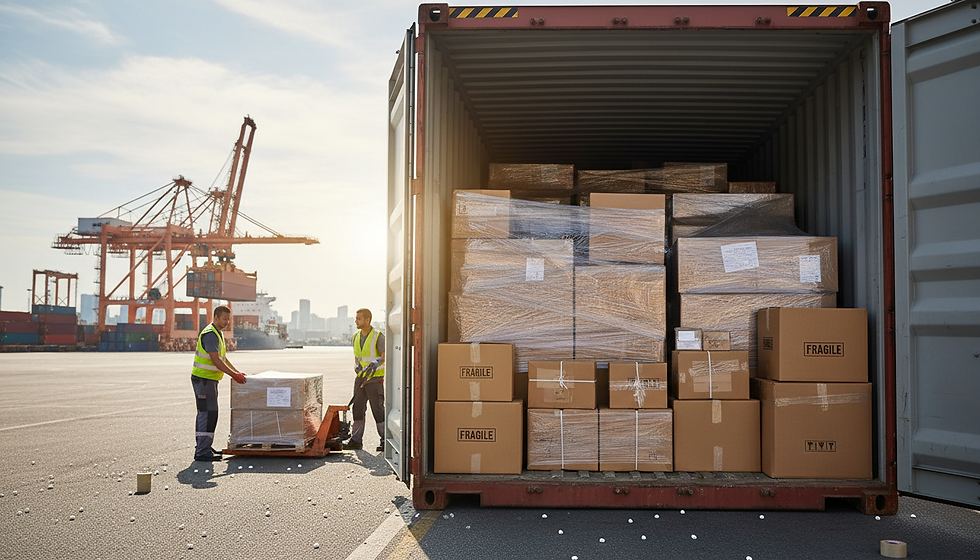
A reliable packing list matters more than many people expect. It does not need to list every spoon and sock, but it should describe the contents of each carton clearly. “Kitchen items”, “books”, “children’s clothing”, and “used bedding” are more useful than vague labels such as “miscellaneous”.
A customs officer may compare the forms, passport details, visa or immigration evidence, shipment inventory, bill of lading, and cargo filing. If the details do not line up, clearance can slow down.
Customs clearance is usually smoother when the shipment tells one consistent story: who owns the goods, why they are moving, what is inside, and when they are arriving.
This article is for general information only. Customs requirements can change, and individual circumstances may affect the documents needed for a specific shipment.
How US customs clearance works for household goods
Household effects entering the United States are handled by US Customs and Border Protection, often called CBP. For unaccompanied personal belongings, the central document is CBP Form 3299, formally called the Declaration for Free Entry of Unaccompanied Articles.
This form is used when personal effects arrive separately from the traveller. That is common with international removals, as the owner may fly to the US before the sea freight container reaches port.
Examples of US arrival points include New York, Los Angeles, Miami, and other ports or inland clearance locations used by freight forwarders and removal companies.
What CBP Form 3299 is used for
Form 3299 helps CBP decide whether the shipment can enter duty-free. It covers details such as:
The importer’s identity
Travel and residency status
The nature of the goods
Whether items were acquired abroad
Whether any goods are restricted or need special attention
The form is especially important for people moving to the US for work, returning residents, students, military personnel, and immigrants bringing their personal belongings.
Duty-free treatment generally applies to used personal effects, not newly purchased goods intended to furnish a home from scratch. Customs may question items that look new, are still in retail packaging, or appear in commercial quantities.
The 12-month ownership requirement
For household goods to qualify under the usual duty-free route, they should be used personal effects owned for at least 12 months. This rule helps separate legitimate household removals from imports of new goods.
In practical terms, used items such as sofas, beds, wardrobes, bicycles, kitchenware, books, clothing, and personal tools are usually straightforward when they fit the owner’s move and appear on the packing list.
Items that may create questions include:
New furniture bought shortly before departure
Multiple identical electrical items
Goods still sealed in retail packaging
High-value items without clear ownership evidence
Stock, samples, or business inventory mixed with household goods
If new goods are included, they may still be importable, but they may not qualify for duty-free entry in the same way. They may need to be declared separately and could attract duty or tax.

Documents usually needed for US clearance
For a household goods shipment to the United States, the customs file normally includes several core documents.
Document | Why it matters |
Completed CBP Form 3299 | Declares unaccompanied personal effects for possible duty-free entry |
Supplemental Declaration form | Provides extra declarations that may be required for the shipment |
Copy of US visa or passport | Confirms identity and immigration or travel status |
Itemised packing list | Shows what is being shipped and helps customs assess the contents |
Ocean freight documents | Links the goods to the vessel, container, consignee, and arrival port |
The exact supporting documents can vary by shipment type. A returning US citizen may provide different evidence from a work visa holder or new immigrant. The main point is that the customs broker or freight team needs the documents early enough to review them before sailing.
ISF filing before the container is loaded
For ocean shipments to the US, another major requirement applies before departure. The Import Security Filing, commonly called ISF, must be transmitted electronically before the goods are loaded onto the vessel.
For shipments leaving the UK, the ISF must be filed 24 hours before the container is loaded onto the ship. This is a pre-departure security rule, not a destination port form that can be handled later at leisure.
Missing or late ISF filing can cause serious problems, including holds, extra charges, and compliance issues. The filing needs accurate information about the importer, consignee, seller or owner, container stuffing location, consolidator, and cargo details.
For household goods, the person moving may not know all of those freight details. That is why the removal company, freight forwarder, or customs broker usually coordinates the filing using the booking and shipment data.
How Canadian customs clearance works for household goods
Canada also provides a duty-free pathway for people moving personal belongings as part of a relocation, immigration, work transfer, or return to Canada. The authority is the Canada Border Services Agency, known as CBSA.
The key document is CBSA Form BSF186, the Personal Effects Accounting Document. This form records the goods being brought into Canada and supports duty-free entry for qualifying personal effects.
Shipments may arrive through ports and terminals linked to Vancouver, Montreal, Toronto, and other Canadian customs locations. The process differs from the US in one major way: Canada usually requires the owner of the goods to attend customs in person.
What Form BSF186 covers
Form BSF186 is used to declare belongings that accompany the traveller and goods that will arrive later. It gives CBSA a record of the owner’s imported personal effects.
The form should include a clear list of household goods, personal items, and higher-value articles. As with US clearance, normal used household goods are usually simpler than new goods, commercial items, or restricted products.
A good Canadian customs file may include:
Completed BSF186
Passport
Immigration document, landed immigrant status, work permit, or other relevant status evidence
Inventory or packing list
Freight arrival notice or shipment reference
Receipts or proof of ownership for higher-value items, where useful
The owner’s status matters. Someone entering Canada as a landed immigrant may be treated differently from a temporary worker, returning resident, or student. The documents should match the reason for entry.
The Canadian self-clearance rule
Canadian law requires the owner of the goods to present themselves in person at a local CBSA customs office to clear the shipment. A removal company or freight forwarder can guide the process and coordinate the shipment, but the goods owner must attend.
This often surprises people who expect the entire customs process to be handled remotely. In Canada, the owner normally takes their passport, immigration or work permit documents, BSF186, and shipment paperwork to CBSA once the goods are ready for clearance.
After CBSA processes the personal effects declaration, the freight provider or destination agent can usually move ahead with release, collection from the terminal, delivery, or onward transport.
The practical lesson is simple: plan your arrival and availability. If the shipment reaches Canada before the owner can attend CBSA, storage and terminal charges may start to build.

Goods to follow must be listed on arrival
Canada has an important rule for split shipments. Items arriving after the traveller are treated as goods to follow. They should be listed on the initial BSF186 form when the owner first arrives in Canada.
This matters if belongings are sent in more than one shipment. For example, someone may travel with suitcases, then receive a shared container shipment weeks later, followed by a second consignment of seasonal items or stored furniture.
Those later goods need to be declared from the start. If they are not listed as goods to follow, CBSA may not treat them as part of the original duty-free relocation in the same way.
A practical approach is to prepare a complete inventory before travelling, even if all the items are not arriving at the same time. The list should separate:
Goods accompanying the traveller
Goods already shipped
Goods to follow in later shipments
This helps CBSA connect later arrivals with the original move.
Restricted food, agriculture, wood, and plant products
The most common customs problems in household goods shipments are not always expensive items. They are often everyday things packed without much thought: spices, dried food, garden tools, wreaths, decorations made from untreated plant matter, or outdoor furniture with soil attached.
Both the US and Canada strictly regulate food, agricultural goods, organic soil, untreated wood, and plant matter. These rules protect national biosecurity, agriculture, forests, and ecosystems.
Food and kitchen goods can trigger inspections
Food is one of the easiest categories to get wrong. Customs and agriculture officers are concerned about pests, disease, contamination, and undeclared animal or plant products.
Risky items may include:
Meat products
Dairy products
Fresh fruit and vegetables
Seeds and grains
Homemade preserves
Open packets of dried food
Pet food
Herbal or plant-based products
Even if an item is allowed, it may need to be declared. If it is not essential, the safest option is often to avoid packing food in an international household goods shipment.
Soil and garden items need careful cleaning
Outdoor goods can carry soil, insects, seeds, or plant disease. This includes bicycles, garden tools, lawn equipment, plant pots, camping gear, sports equipment, and children’s outdoor toys.
Before packing, clean these items thoroughly. Remove soil from tyres, blades, soles, pots, and frames. Do not pack live plants, loose soil, or garden waste.
Customs inspection staff may order cleaning, treatment, destruction, or re-export if contaminated items are found. That can add cost and delay.
Wood packaging and timber crating must meet export standards
Many household goods need timber protection for sea freight. Fragile furniture, artwork, antiques, machinery, and high-value items may require wooden crates.
Untreated wood can carry pests, so export timber crating and wooden packaging must meet the relevant international treatment standards. Freight teams normally arrange compliant export crating and mark the timber correctly.
Do not build makeshift crates from old timber, garden wood, or untreated pallets. They may be rejected or inspected, even if the goods inside are acceptable.

How to prepare a smoother transatlantic household shipment
Good customs compliance is built into the move from the start. Waiting until the container is on the water leaves little room to fix errors.
The best preparation follows a simple sequence.
Confirm the destination country’s customs route early
A shipment to the US and a shipment to Canada may look similar on moving day, but the clearance process is different.
For the US, the focus is on CBP Form 3299, supporting declarations, eligibility for duty-free entry, and timely ISF filing before the vessel is loaded.
For Canada, the focus is on BSF186, the owner’s immigration or work status, in-person self-clearance, and correct listing of goods to follow.
Build a clear packing list as the goods are packed
The packing list should be created during packing, not reconstructed later from memory. Each carton or package should have a number and a useful description.
Avoid vague terms. Customs officers do not need a novel, but they do need enough detail to understand the contents.
Better descriptions include:
Used winter clothing
Books and personal papers
Kitchen utensils and crockery
Children’s toys
Used bed linen
Hand tools cleaned and packed
Framed family photographs
Weak descriptions include:
General
Stuff
Household
Personal
Assorted
Separate restricted or questionable items
Before packing day, set aside anything that may cause customs, agriculture, or security concerns. Ask the freight team before including it.
Pay close attention to:
Food
Alcohol and tobacco
Medicines
Plants, seeds, and soil
Untreated wood
Weapons or sporting firearms
Animal products
High-value new purchases
Some goods may be allowed with extra permits or declarations. Others should not be packed at all.
Share documents before the shipment sails
For US shipments, the ISF deadline makes early document collection essential. The freight team needs time to check the details, submit the filing, and correct any errors before loading.
For Canada, early preparation helps the owner understand when and where they must attend CBSA. It also reduces the risk of missing goods to follow from the initial declaration.
A professional international freight team can manage the ocean booking, mandatory pre-departure filings, export timber crating, and destination port clearance coordination. The owner still plays a key role by supplying accurate documents, honest declarations, and a complete packing list.
The key takeaway for US and Canada household goods shipping
The duty-free pathways for household goods into the United States and Canada are clear, but they depend on preparation. Used personal effects need to be documented properly, restricted items need to be removed or declared, and timing matters.
For the US, focus on CBP Form 3299, the Supplemental Declaration, passport or visa evidence, a clear packing list, and the ISF filing before the container is loaded in the UK.
For Canada, focus on CBSA Form BSF186, in-person self-clearance, proof of immigration or work status, and listing all goods to follow when arriving.
The simplest way to avoid delays is to treat customs as part of the move, not the final step. Pack carefully, describe goods clearly, clean outdoor items, use compliant export crating, and get the paperwork checked before sailing.

Comments